Welcome:Ultra CNC Machining


 Blogs
 Industry News
Overview of CNC machining
CNC machining is controlled by computers to produce high-precision components. During this process, computer programs control the movement of cutting tools, while CNC programming controls the cutting tools to remove material from the workpiece to create finished parts.
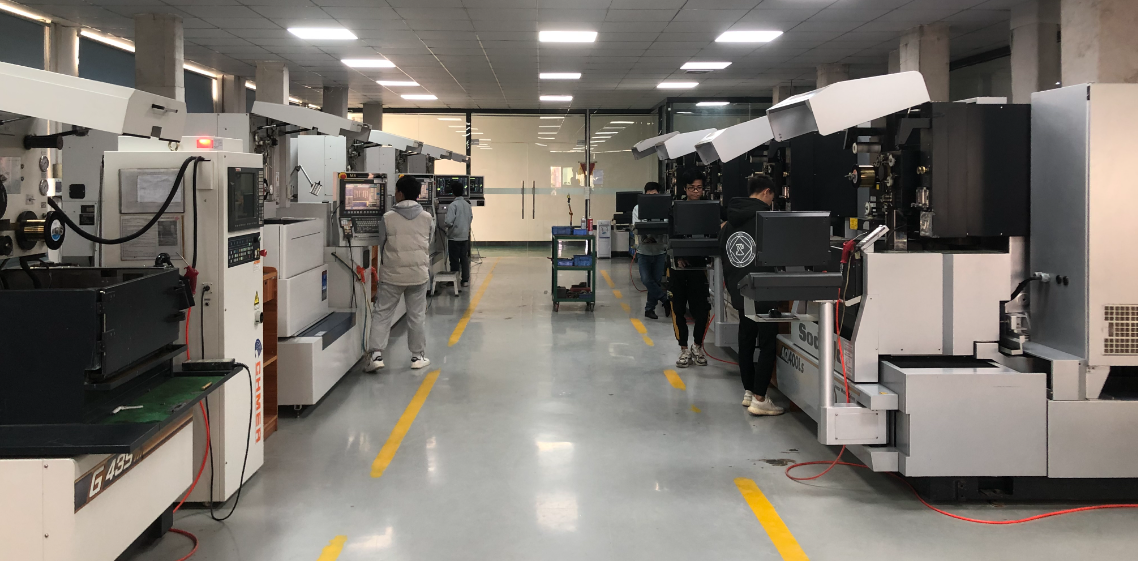
CNC technology can produce a range of components, including those made of metal, plastic, and other materials. This process can also produce parts with complex geometric shapes and high precision, making it a popular choice for many industries such as aerospace, automotive, medical equipment, and consumer goods.
Compared with traditional processing methods, it has multiple advantages, including improved accuracy, consistency, and speed, as well as the ability to produce complex geometric shapes and intricate details. It also allows the use of advanced cutting tools and technologies, such as multi axis machining centers and high-speed machining, which can further improve the efficiency and quality of the process.
The History of CNC Machining Its history can be traced back to the 1940s, when the first numerical control (NC) machine tool was developed. Over time, these machines have become more widespread and complex. This enables them to meet the requirements of various industries such as aerospace, automotive, and defense.
However, old NC machines still require manual input and have limited functionality.
With the introduction of computers, the transformation of manufacturing began in the 1970s, bringing a breakthrough: the first CNC machine tool. These advanced machines equipped with computer control can process data at unprecedented speed and accuracy. This innovation allows CNC operators to directly input commands into the machine, which then automatically performs the necessary operations, significantly simplifying the manufacturing process.
With the continuous advancement of technology over the years, this is just the beginning of CNC machine tools. The development of more advanced software and hardware, as well as the introduction of new materials and tool options, means that manufacturing units have more possibilities.
Nowadays, CNC machinery is common in multiple industries and can produce various high-precision products.
Modern CNC systems are committed to minimizing human intervention as much as possible. This ensures consistent and continuous performance, thereby promoting intelligent manufacturing and providing excellent results.
However, CNC manufacturing requires careful consideration from the initial design to the final manufacturing. The entire process is divided into three different steps:
1 - Design The first key step in CNC machining involves software applications such as CAD, CAM, and CAE. Engineers and designers rely on these tools to design parts and products, and then evaluate their manufacturability. This evaluation, known as Design for Manufacturing (DFM), is crucial. It ensures that the design is optimized to maximize efficiency and reduce costs, while working within the limitations of existing technology.
In most cases, CAD tools on the market come with internal CAM tools, which help with pre-processing and programming.
After completing the CAD design, the designer converts it to a CNC compatible file format, usually STEP or IGES.
2- Preprocessing and Programming Numerical control machine programming mainly involves using G code and M code to communicate with the machine. These codes are generated by CAM software packages and can serve as guides for cutting tool paths in CNC operations.
Usually, if the design meets DFM (Manufacturing Design) standards, CNC mechanics do not need to intervene in the pre-processing or operational stages. However, if the design does not meet these standards, a certain degree of manual intervention may be required to ensure optimal performance.
Preprocessing is a standard step in CNC machining, and its duration depends on the quality of the design. G-code or M-code programming usually takes only a few minutes. However, the success of CNC programming depends on whether the design follows DFM conventions. Accurate design produces correct code and satisfactory results, while design flaws lead to incorrect code and poor outcomes.
3- Machining The final stage is the machining process, which uses the code provided in the previous step to remove excess material from the block.
The accuracy of machine tool machining is crucial, but replicating the precise dimensions of CAD models is often challenging. This is why mechanics typically apply the ISO 2768 tolerance standard, which varies according to industry requirements. Stricter tolerances can lead to increased manufacturing costs, which is a widely accepted principle.