Welcome:Ultra CNC Machining



 Blogs
 Industry News
Powder coating is a dry process used for metal products (such as aluminum and iron). This technique involves the electrostatic adsorption of powder coatings onto the surface of the workpiece, followed by curing in an oven to produce a glossy protective coating that effectively protects metal products from corrosion and damage. Additionally, powder coating has a relatively low environmental impact.
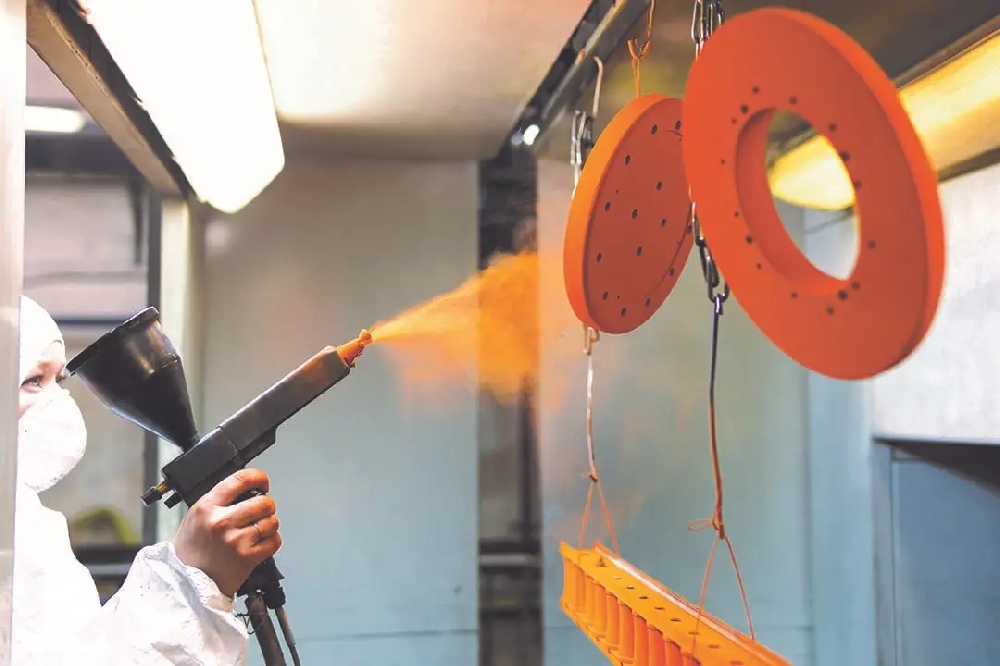
This process uses a spray gun or a disc atomizer to disperse the coating into a uniform and fine mist, which is then applied to the surface of the object being coated, utilizing pressure or centrifugal force.
Powder coating is suitable for both functional and decorative applications. Functional applications include abrasive products and those used in outdoor and high-temperature environments. Its application range is extensive, primarily covering the automotive, construction, and white goods sectors. Furthermore, powder coating is widely used for indoor and outdoor furniture, household products, and office supplies, making it one of the most commonly used coating methods today.
There are no limitations on the color range for powder coating, allowing for metallic, speckled, textured, and wood-grain surface finishes.
The most commonly used powder coating methods are electrostatic spraying and fluidized bed powder coating.
Electrostatic Spraying: The materials used are composed of a mixture of resins, pigments, fillers, and adhesives. This mixture is ground into a fine powder, with each particle containing the necessary components for application.
In terms of processing costs, powder coating does not incur mold costs, but equipment costs are relatively high. The processing time is short, as typically one coat is sufficient. The baking and curing process for the resin adds approximately half an hour. This process is straightforward; powder can be easily sprayed, and the potential voltage difference promotes the formation of a uniform coating, resulting in low labor costs.